Welding automation
How Kemppi helps its partners succeed in cobot welding
September 1, 2025
In this article, we discuss the evolving landscape of cobot welding with two industry experts: Alessio Cocchi, Global Cobot Sales & Marketing Manager from ABB, and Jakub Bancer, Key Account Manager from FANUC.
Kemppi marketing
In this article, we discuss the evolving landscape of cobot welding with two industry experts: Alessio Cocchi, Global Cobot Sales & Marketing Manager from ABB, and Jakub Bancer,Key Account Manager from FANUC They share their perspectives on the trends shaping cobot welding, the key factors in selecting the right solution, and how Kemppi's cobot welding technology is helping integrators and manufacturers succeed.
The evolution of cobot welding in Europe
The cobot welding industry is rapidly evolving, driven by increasing automation demands, labor shortages, and the need for more flexible production processes. European manufacturers, particularly SMEs, embrace collaborative robots (cobots) to enhance welding efficiency, precision, and safety.
According to Alessio Cocchi from ABB, "The demand for automation solutions is rising, particularly to address labor shortages and improve productivity. Cobots make welding operations more flexible for high mix—small volumes, helping processes become more efficient, precise, and safer."
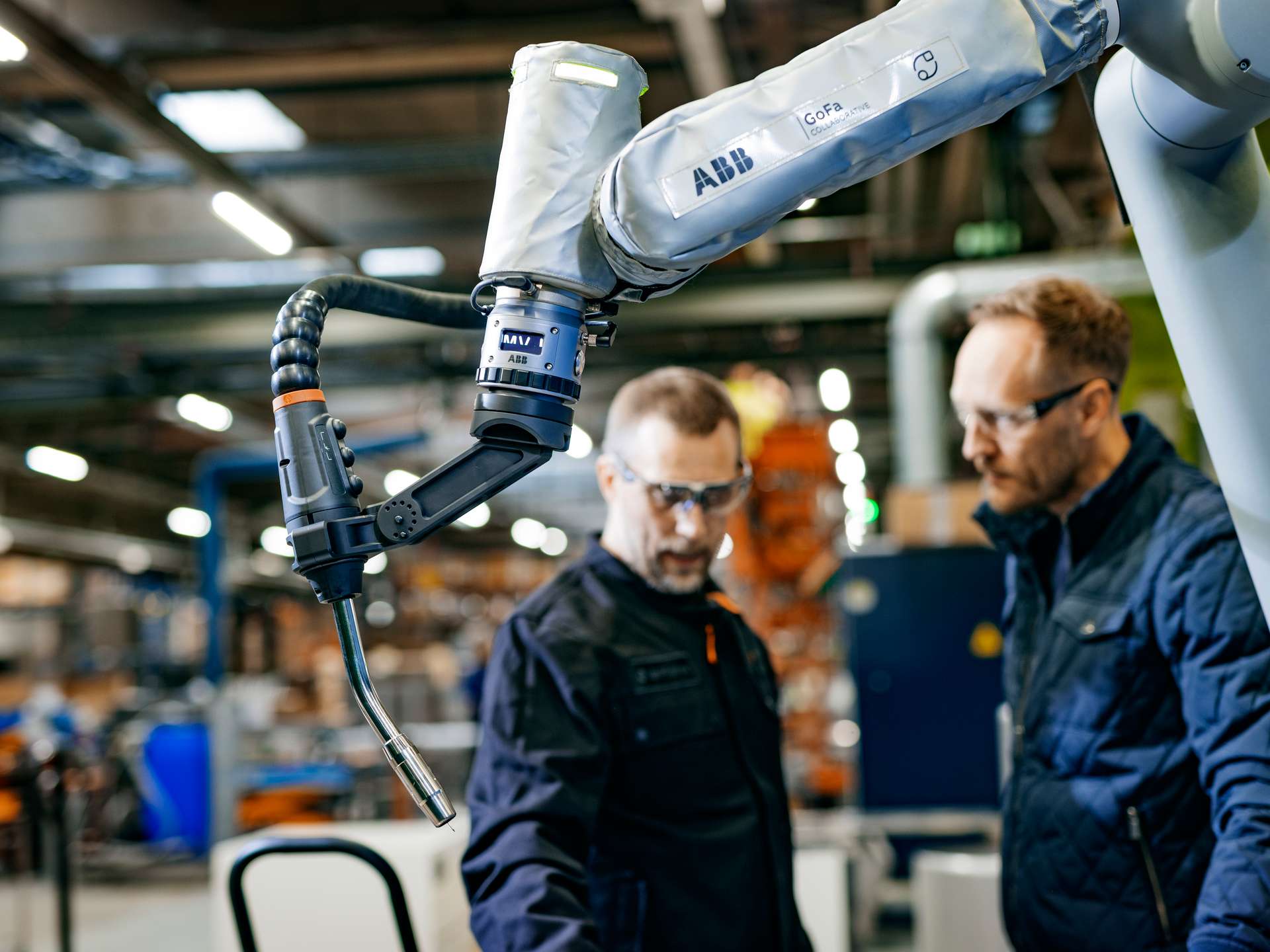
Moreover, the push for sustainable manufacturing has accelerated the adoption of energy-efficient welding technologies. ABB's GoFa cobot, for instance, operates on low energy consumption, making it a sustainable choice for companies looking to reduce their carbon footprint. Jakub Bancer from FANUC adds, "FANUC continues to expand its cobot range to meet industry-specific certifications and safety requirements, ensuring flexibility and reliability."
Additionally, the European steel industry is shifting towards low-carbon production methods to meet stringent environmental regulations. Companies are investing in green technologies to reduce emissions, and cobot welding solutions play a crucial role in this transition by improving energy efficiency and reducing waste. Cocchi from ABB notes, "Our GoFa cobots are designed to consume minimal energy while maintaining high efficiency, aligning with the industry's sustainability goals."
What manufacturers should look for in cobot welding solutions?
When selecting a cobot welding solution, there are a few main factors to consider. Our experts gathered a list of the most important features to emphasize when investing in one.
Ease of programming: Simple, user-friendly interfaces allow welding professionals to quickly set up and program cobots without extensive robotics expertise and adapt the programs quickly to new products.
Flexibility: The ability to adapt to different production volumes is important for companies with a mix of high- and low-volume production.
Safety and compliance: Meeting CE safety standards and ensuring safety in all welding operations.
High-quality welds: Ensuring consistent and repeatable welding quality to reduce defects and rework.
Seamless integration: Compatibility with existing production lines and automation systems and easy-to-integrate solutions with plug-and-play components.
Sustainability: Energy-efficient welding solutions that align with environmental regulations and carbon reduction initiatives.
Both ABB and FANUC emphasize that cobots should be easily integrated into production environments. ABB GoFa cobots stand out for their enhanced reach and accuracy, while the wide range of FANUC cobots offers intuitive hand-guided programming, making them accessible to operators without advanced robotic experience.
Why invest in Kemppi's cobot welding solution?
Kemppi's cobot welding solutions are designed to meet the needs of customers, offering:
A ready-to-weld package: Kemppi's cobot welding package provides a plug-and-play solution that includes a welding power source, hose kit, and the GXe-C cobot torch, making integration seamless.
Fast and easy setup: ABB and FANUC integrators praise the ease of setup and programming, which allows quick adaptation to new workpieces.
Compact design: The small footprint makes it ideal for SMEs looking to automate welding in limited production spaces.
High-quality welds: Stable and repeatable welding quality ensures reduced scrap and rework.
Strong technical support: Kemppi's responsive support team fosters trust and smooth cooperation with integrators.
Energy efficiency: Kemppi solutions contribute to lower energy consumption, supporting sustainable manufacturing practices.
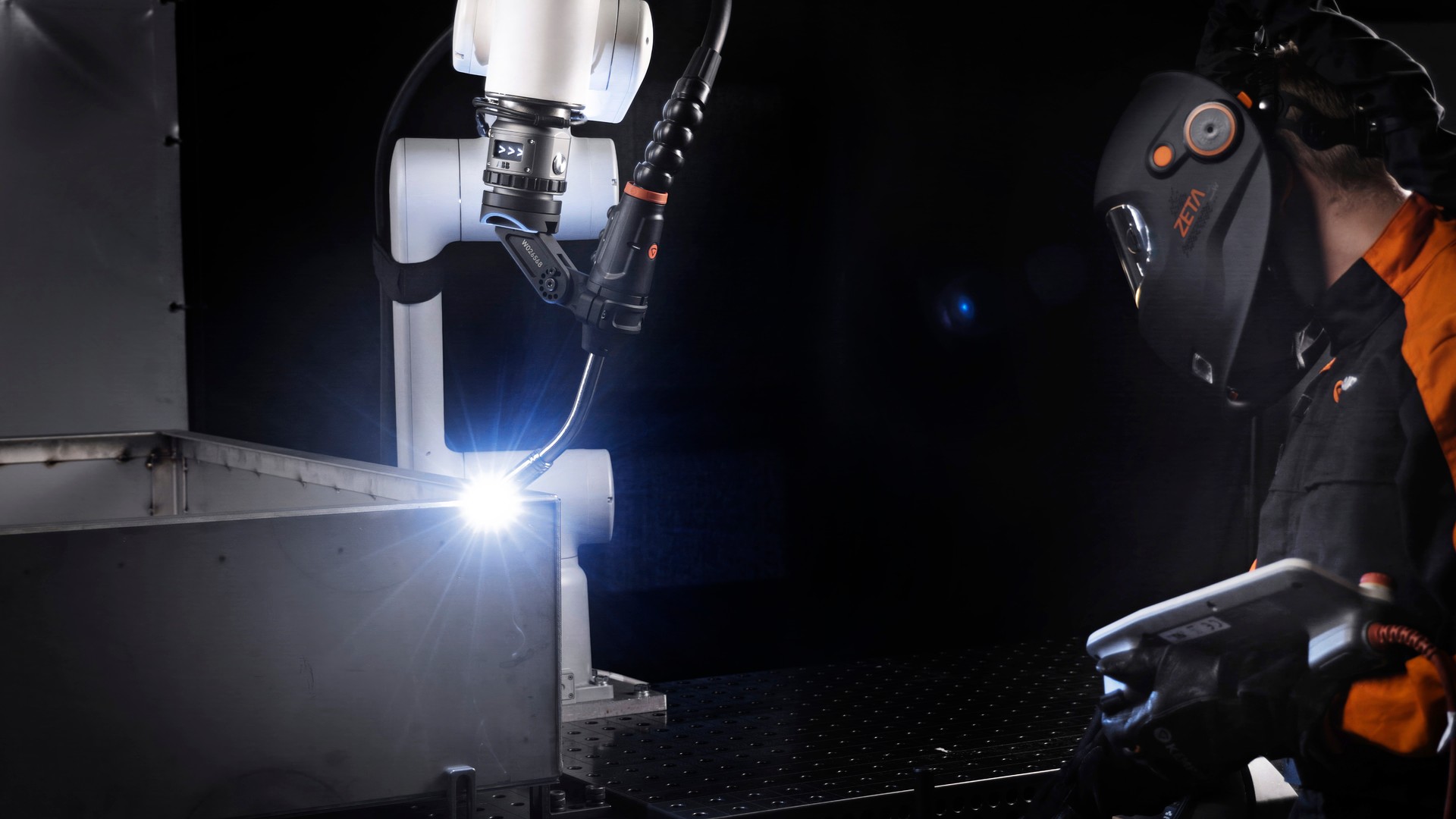
Cocchi from ABB emphasizes that Kemppi's cobot welding package is well-aligned with industry safety standards and guarantees stable and repeatable welding quality. Bancer from FANUC highlights the efficient communication between Kemppi's welding source and their cobots. The GXe-C torch, equipped with control buttons, enhances the user experience by enabling more precise manual input during welding operations.
Collaboration between Kemppi and its partners
The partnership between Kemppi and major cobot manufacturers like ABB, FANUC, Yaskawa, and Universal Robots plays a critical role in advancing cobot welding. Integrators appreciate close cooperation, especially in adapting hardware and software to meet market needs. Alessio Cocchi from ABB acknowledges, "Kemppi's fast adaptation of its solutions, such as attachments for manual welding torches and remote panels, has been invaluable."
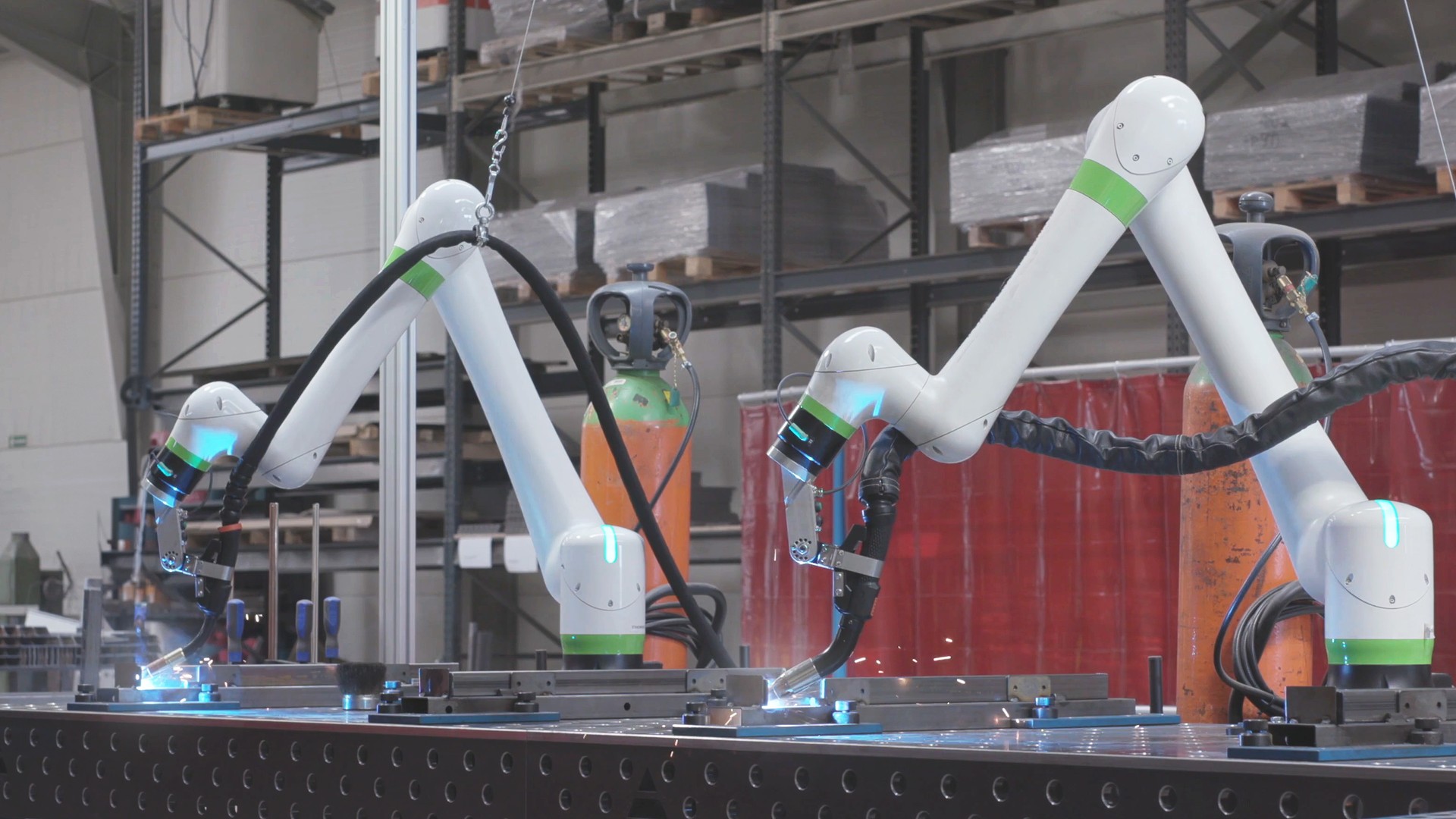
FANUC values Kemppi's transparent welding system and ease of implementation. Jakub Bancer says, "We are looking forward to further cooperation with Kemppi to raise awareness about automation benefits and introduce more manufacturers to cobot welding."
Future outlook
ABB and FANUC anticipate continued growth in cobot welding adoption, particularly in the SME sector, where automation is still in its early stages. As new cobot models with enhanced capabilities enter the market, the demand for high-quality, easy-to-integrate welding solutions will rise. Both cobot manufacturers expect ongoing collaboration with Kemppi to promote cobot welding solutions and educate customers on the benefits of automation.
Conclusion
Kemppi's cobot welding solutions empower customers by providing easy-to-use, high-quality, and safety-compliant welding systems. Through strategic partnerships with leading cobot manufacturers like ABB and FANUC, Kemppi ensures that its solutions remain at the forefront of automation trends, helping businesses achieve greater productivity, efficiency, and welding excellence while supporting the industry's transition to low-carbon production methods.

Kemppi marketing
Kemppi marketing
Kemppi marketing aims to evoke discussion on the transformation of modern welding and bring you the latest stories from within the global welding industry, told by true experts in their respective fields.
Related products
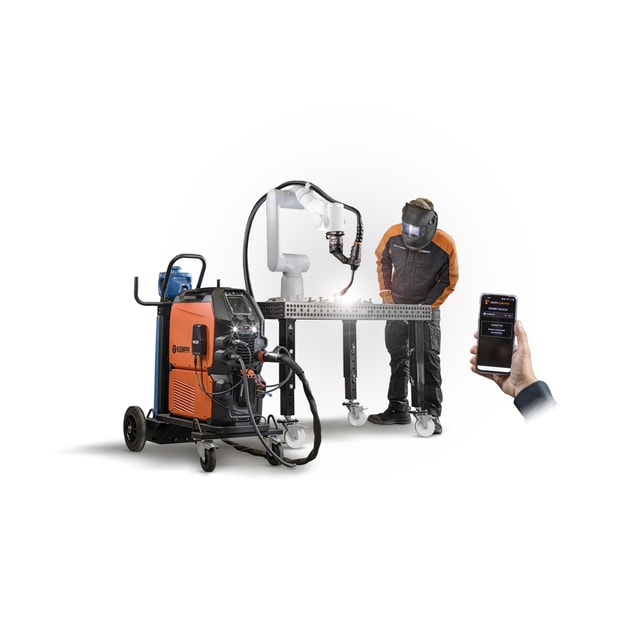
Product family
Kemppi's cobot welding solutions offer a streamlined setup with flexible options for various automated welding applications. Designed for reliability, precision, and high performance, our offering includes the Master M and X5 FastMig models and, for intense industrial applications, the AX cobot welding system with advanced automation capabilities.
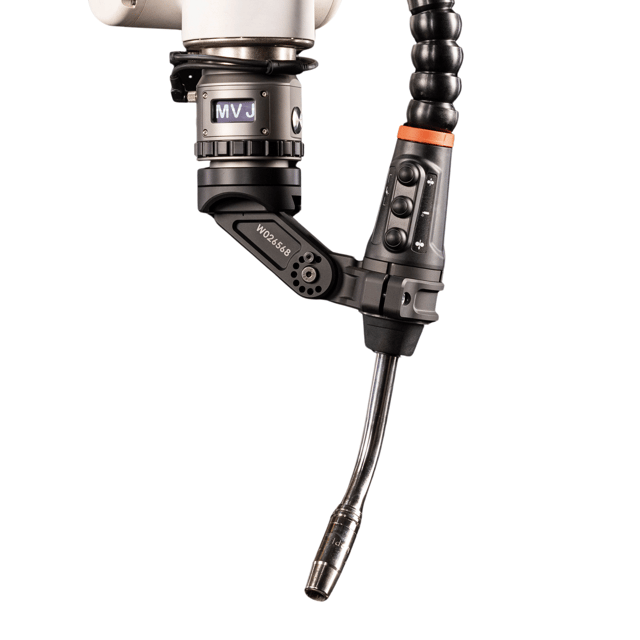
Product family
The Flexlite GXe-C is a MIG/MAG cobot torch series that makes Kemppi precision, reliability, and durability available for cobot solutions at the push of a button. It is cobot-ready and designed to 'plug-in-and-weld'. It's quick to integrate and simple to operate with accessible push buttons.
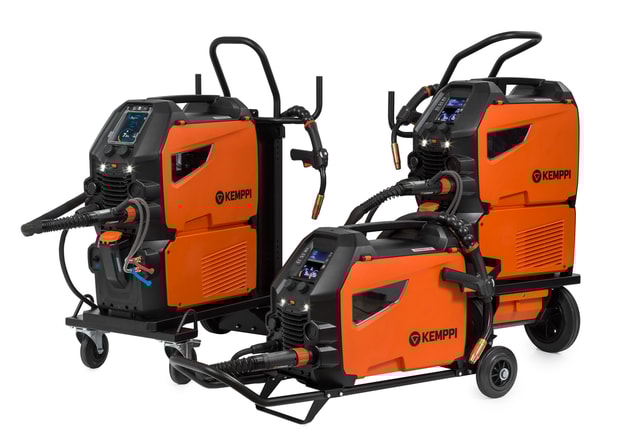
Product family
Master M is a compact welding machine that combines premium welding performance with excellent usability and fast set-up, offering a compact but powerful MIG/MAG welder for manual, synergic, and pulse MIG welding.
More blog posts
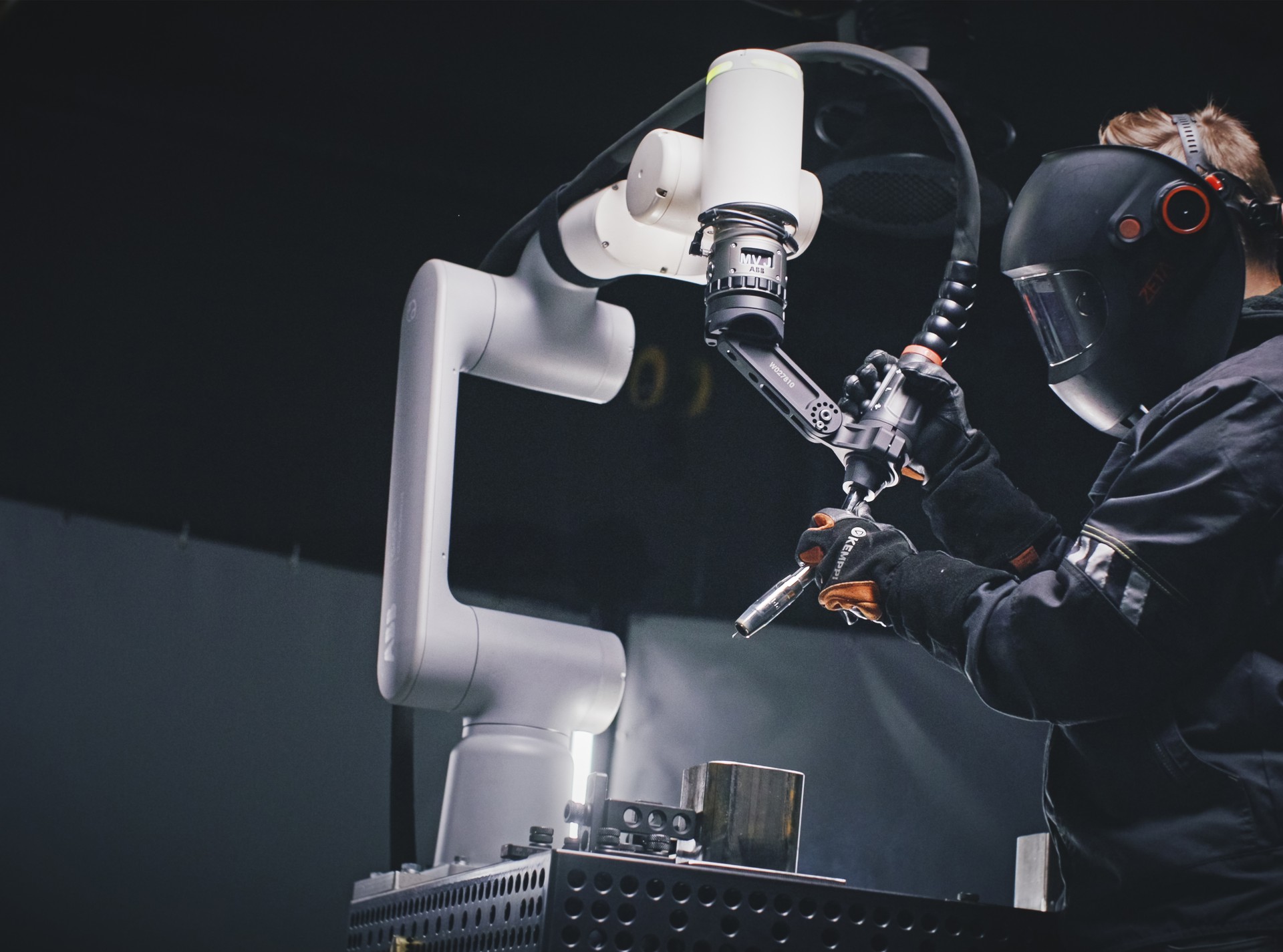
Cobot welding automates manual welding for superior efficiency and quality
Cobot welding integrates collaborative robots (cobots) into welding processes to enhance productivity, quality, and safety.
Welding automation
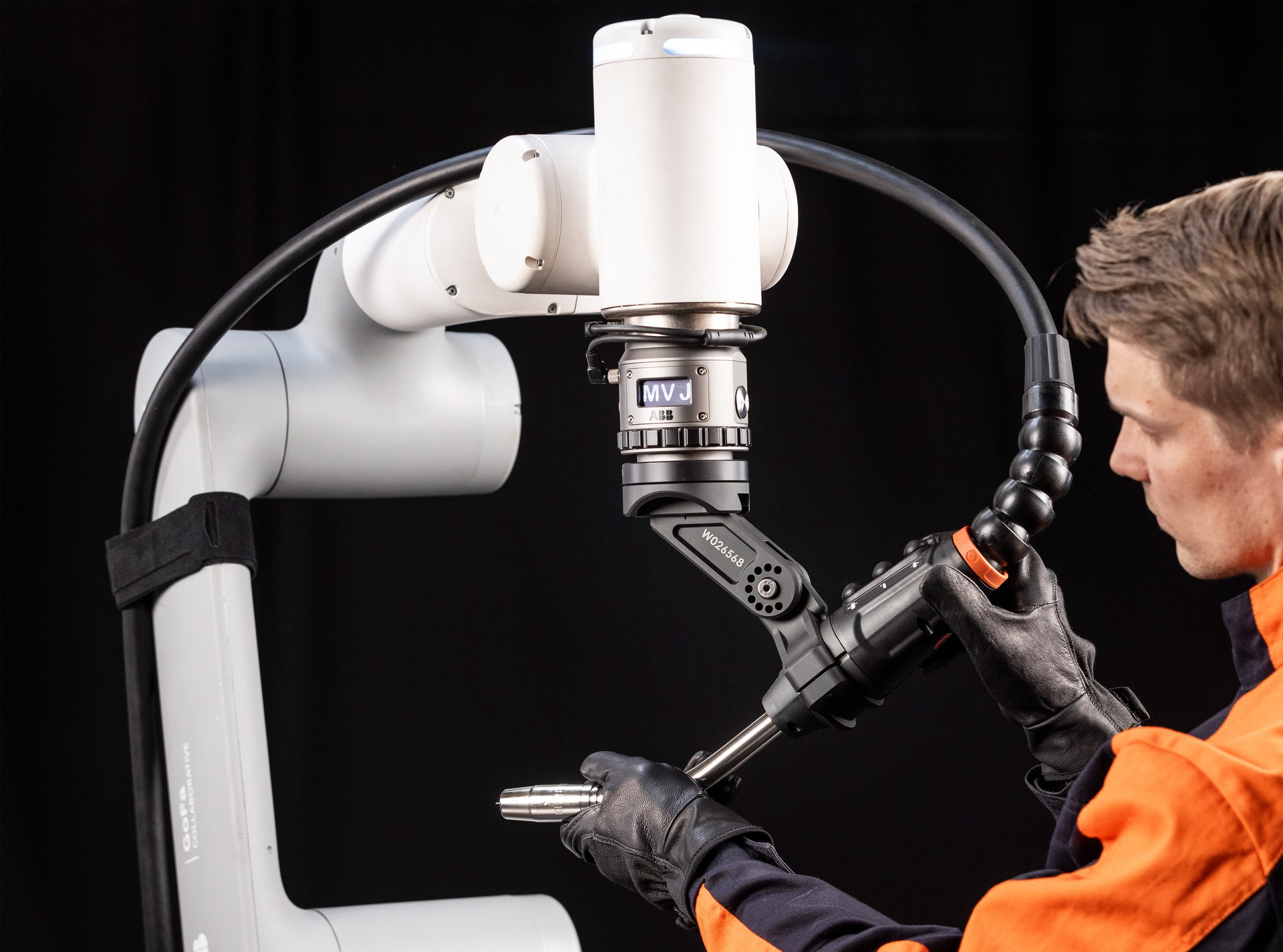
Kemppi’s Cobot Solution: Practical automation for modern welding needs
The welding industry is under constant pressure to improve productivity, maintain high quality, and address a growing shortage of skilled labor. Collaborative robots, or cobots, provide a flexible and efficient way to automate welding tasks without fully replacing the human operator. Kemppi’s cobot solution stands out with its unique approach: a practical, cost-effective combination of proven hand-welding technology and smart integration tools.
Welding automation
Get ready for welding automation
Robotic manufacturing technology is more capable than ever. To see how it impacts the welding industry, let's start by taking a closer look at some of the important trends and key considerations for anyone thinking about investing in welding automation.
Welding automation
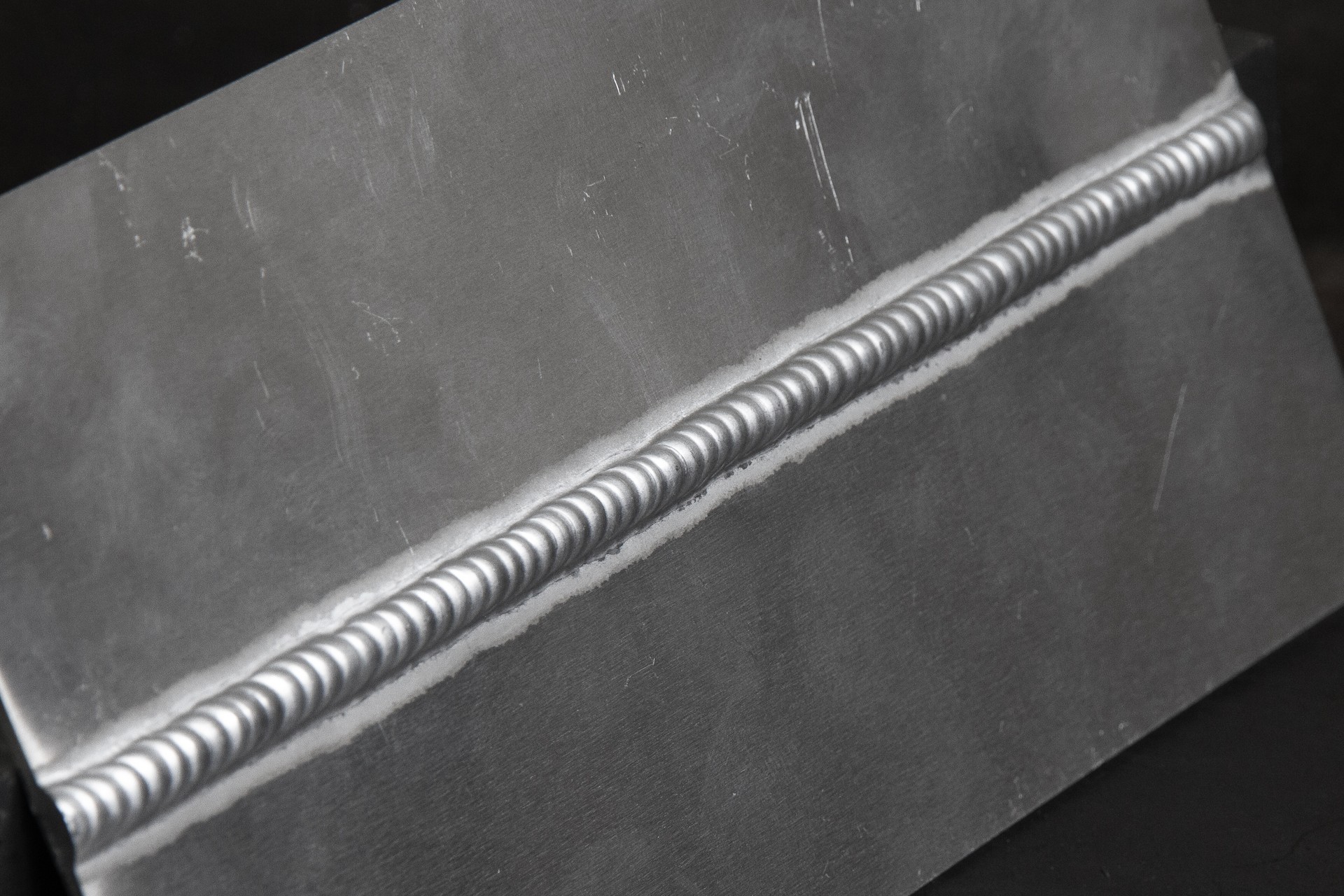
Kemppi's advanced welding processes: TIG and stick welding (MMA)
In TIG welding, process development has mainly focused on modifying the current modes in different situations. In practice, this means variations of pulse and AC welding, as well as ignition or tack welding. In the case of pulse welding, the welding machine user has numerous choices, as the adjustment possibilities for these process variations are highly versatile.
Welding ABC, Manual welding
Magnetism in welding: how to deal with magnetic blow
When welding ferritic steels, especially high-strength grades, magnetic blow can become a real challenge. This phenomenon occurs when magnetic fields interfere with the welding arc, causing instability, spatter, and sometimes making welding almost impossible.
Manual welding
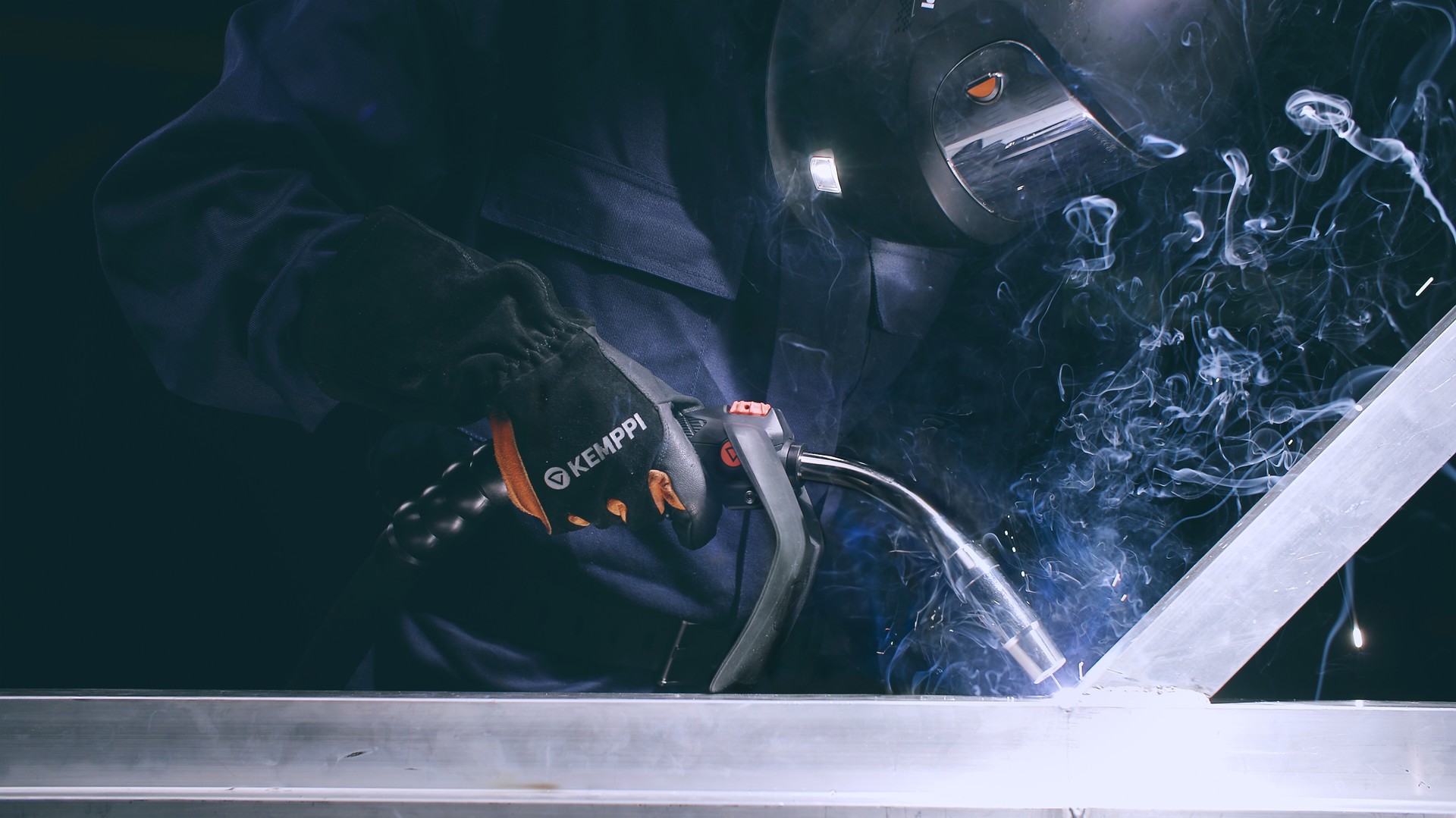
Welding performance starts at the torch
A closer look at the most hands-on part of every weld.
Manual welding